Skip to content
  • API LIFECYCLE
    • API Design
    • API Testing
    • API Mocking
    • API Generation
    • CI/CD
  • DEPLOYMENT
    • Tyk
    • Kong
    • Mulesoft
    • WSO2
    • Apigee
    • IBM API Connect
  • REPOSITORIES
  • PRICES
  • RESOURCES
    • Manuals and Ebooks
    • Study cases
      • APIs and processes Migration
      • Admiral Seguros: rated-A APIs
    • API Quality Guides: videotutorials
    • Release Notes
    • Partners
    • Blog
  • CONTACT
  • English
    • Español
  • LOG IN
FREE DEMO
FREE DEMO
  • LOG IN
FREE DEMO
FREE DEMO
  • API LIFECYCLE
    • API Design
    • API Testing
    • API Mocking
    • API Generation
    • CI/CD
  • DEPLOYMENT
    • Tyk
    • Kong
    • Mulesoft
    • WSO2
    • Apigee
    • IBM API Connect
  • REPOSITORIES
  • PRICES
  • RESOURCES
    • Manuals and Ebooks
    • Study cases
      • APIs and processes Migration
      • Admiral Seguros: rated-A APIs
    • API Quality Guides: videotutorials
    • Release Notes
    • Partners
    • Blog
  • CONTACT
  • English
    • Español

Documentación APIQuality

Encuentra los distintos manuales de APIQuality y aprende a utilizar nuestra herramienta

Manuales

  • Manual de Usuario

Configuración

  • Ramas, pipelines y stages
  • Colecciones en APIQuality
  • Guía de estilos en APIQuality
  • Configuración de APIQuality

APIs

  • Developer Portal
  • Explorador de APIs
  • API Managers en APIQuality
  • Ciclo API First

English version

  • Developer Portal in APIQuality
  • API Managers in APIQuality
  • API Explorer in APIQuality
  • API First Cycle in APIQuality
  • Branches, pipelines and stages
  • API colletions in APIQuality
  • Style guides in APIQuality
  • Config
  • User’s Manual
View Categories
  • Inicio
  • Documentación
  • English version
  • API colletions in APIQuality

API colletions in APIQuality

Collections are a way of grouping APIs that allows working in a simpler way. It is important to take into account that style guides are applied on a collection, so all APIs belonging to the same collection will be scanned with the same style guide.

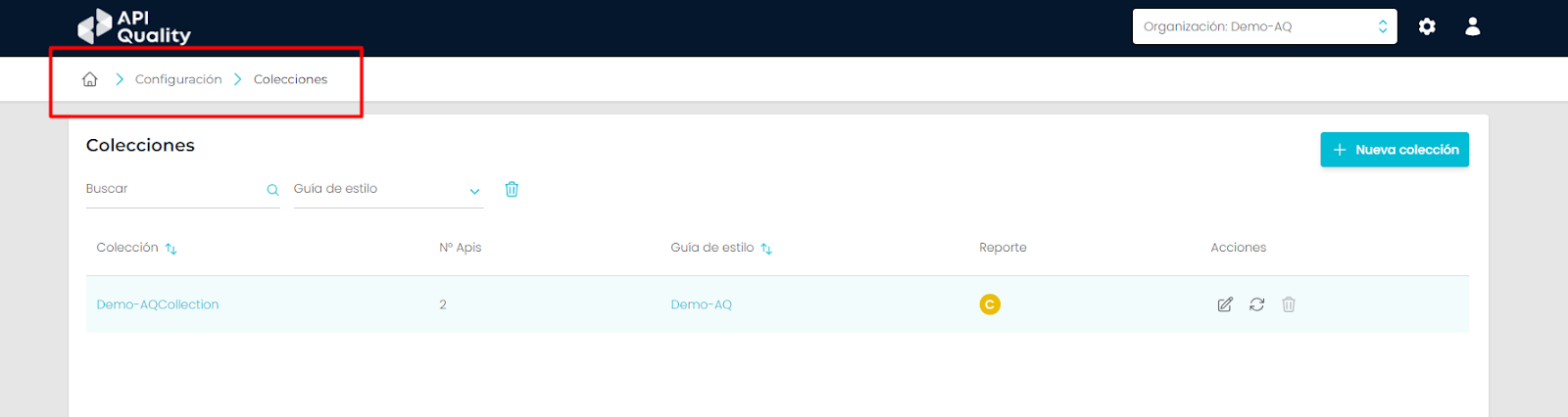
“Collections” can be accessed from the configuration menu. You can create as many collections as you want and in each of them you can add all the necessary APIs.

Once you access “Collections” from the configuration menu, you will see a list of existing collections, the number of APIs contained in the collection, the style guide, the ratings of the collection and a button to create a new collection. We can also edit, update and delete the desired collection.

It should be noted that once the registration is done and an account with its corresponding organization is created, a collection is also created by default, so when accessing “Collections” for the first time, the first one created by default will appear.
5.5.1. Create a new collection #

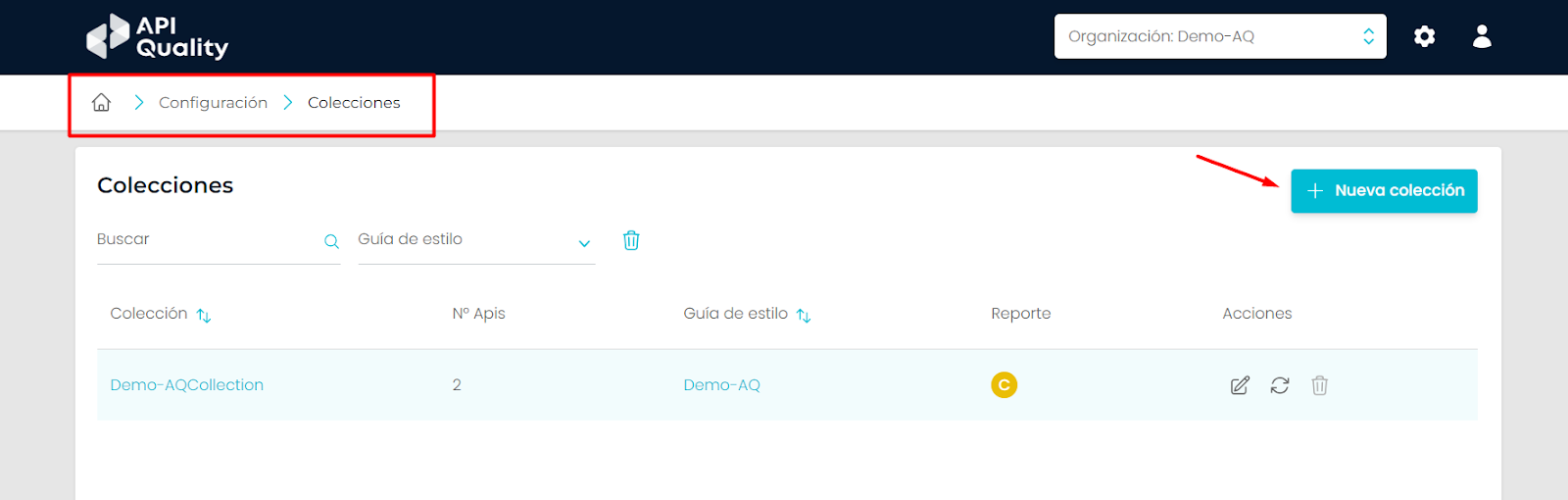
To start creating new collections click on the New Collection button.
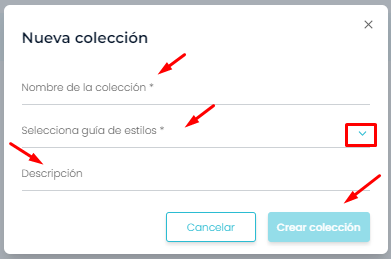
Once clicked, a form will open where we will be asked to enter a name (mandatory) and select the style guide that will be applied in the API scan, as well as a description section of the same. It is important to remember that, if no style guide is selected, the one we have marked as default will be applied.
5.5.1. Colection detail #

Each of the created collections can be edited or deleted from the icons that appear to the right of each collection. Note that a collection that is associated to an API cannot be deleted.
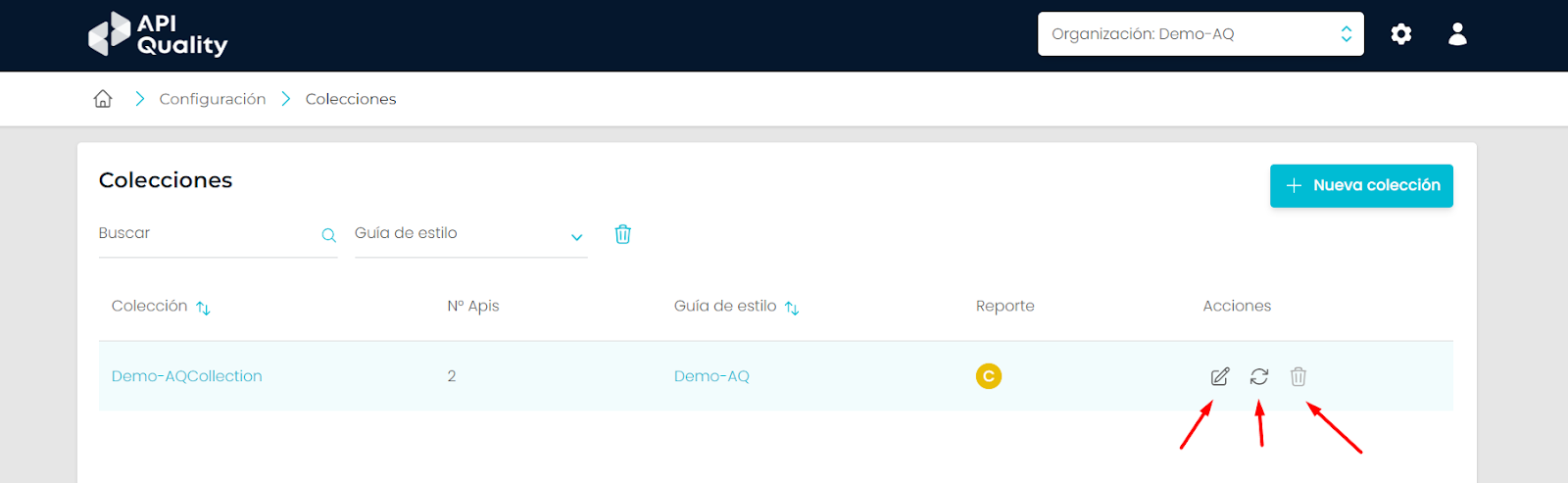
The style guide associated with each collection created can be accessed from the style guide link.

You can also access the details of a collection by clicking on the link of that collection.

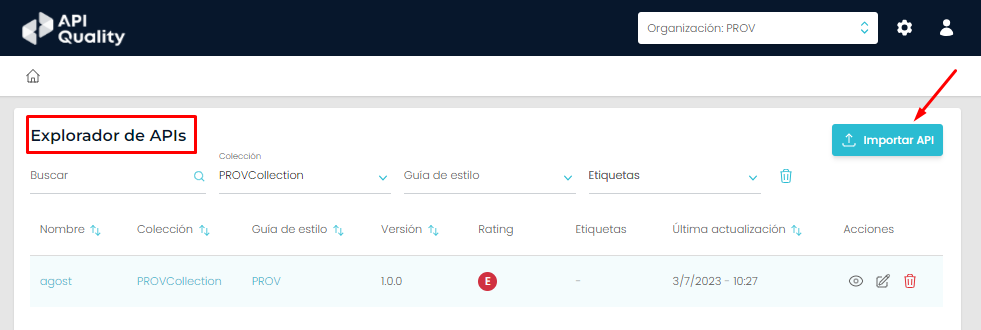
In the detail of each collection you can see all the APIs that belong to it and you can also create more by clicking on the Import API button although, as we will see in section 6, you can also do it from the API Explorer.
5.5.2. Colection report #

Once at least one API has been uploaded into the collection and the API First cycle has been run, a collection report will be generated, showing both the overall collection scores and the individual scores for each API.

The complete report with more information can be accessed in each API section. Section 6.2.2.1.
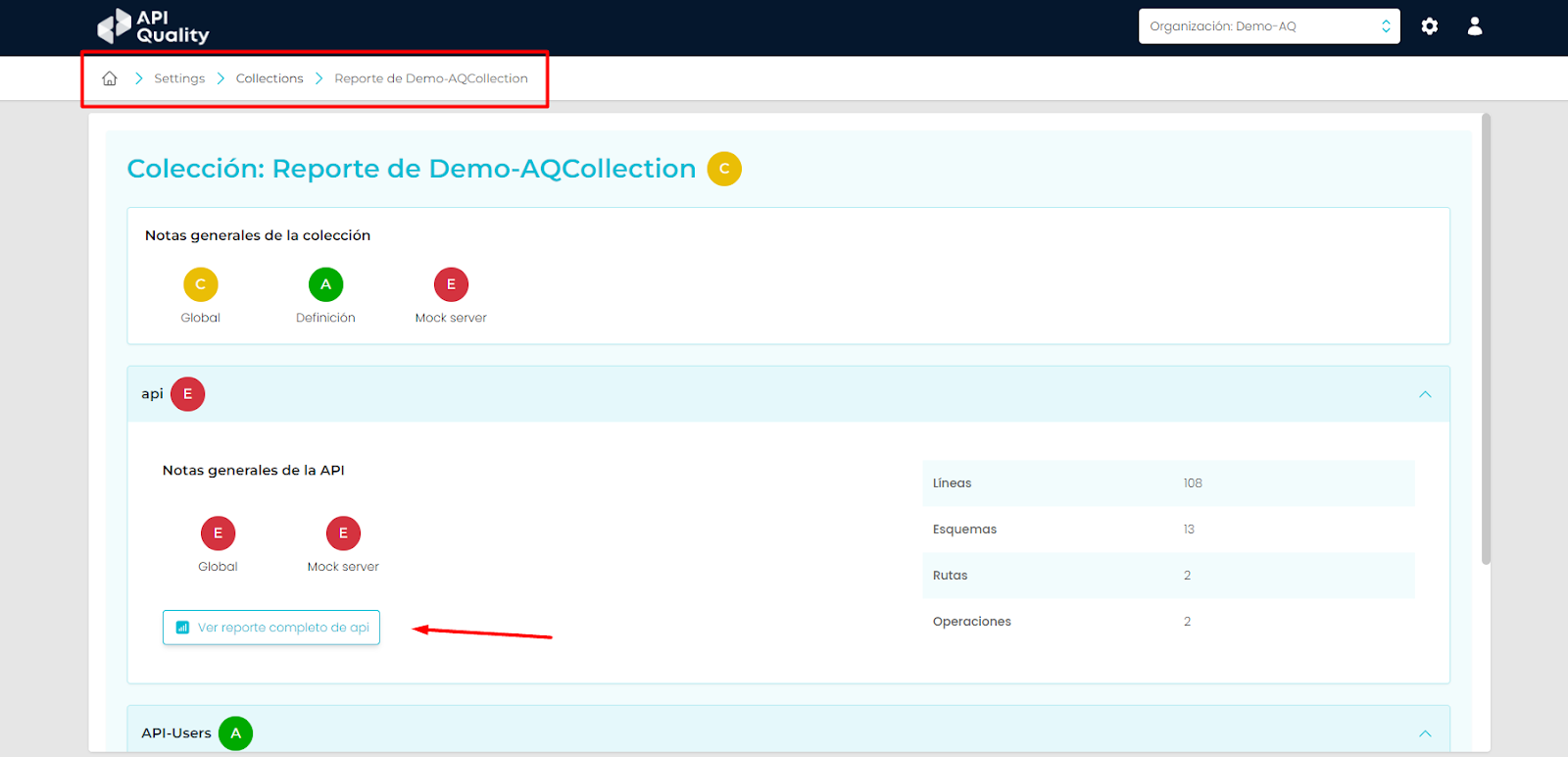
It should be noted that until we have assigned an API to our collection, we will not be able to have a collection report.

What are your Feelings

Share This Article :

  • Facebook
  • X
  • LinkedIn
  • Pinterest
¿Sigues con problemas? ¿Cómo podemos ayudar?

¿Cómo podemos ayudar?

Updated on 2 de October de 2024
Branches, pipelines and stagesStyle guides in APIQuality

Powered by BetterDocs

Leave a Reply Cancel reply

Your email address will not be published. Required fields are marked *

Tabla de contenidos
  • 5.5.1. Create a new collection
  • 5.5.1. Colection detail
  • 5.5.2. Colection report
  • API LIFECIYCLE
  • PRICES
  • RESOURCES
  • CONTACT
  • Legal notice
  • Terms and conditions
  • Privacy policy
LinkedInTwitterYouTubeGitHub

Copyright © 2026